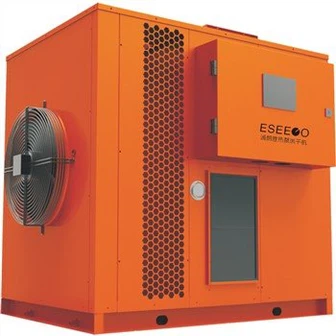

how to sizing a greenhouse dehumidifer
Sizing a greenhouse dehumidifier can be a bit overwhelming given the various aspects and factors that come into play. In determining the appropriate size, you need to consider the size of the greenhouse, the climate in which it is located, the type of plants you are growing, and the humidity levels within the greenhouse. In this article, we will discuss the factors that should guide you in choosing the right greenhouse dehumidifier size to keep your plants healthy and optimum.
c
Step 1: Determine your greenhouse size and volume
The first step in choosing the right size dehumidifier for your greenhouse is determining its size and volume. The size of your greenhouse is measured by its area or the length and width of the structure. However, this measurement alone is insufficient for choosing the right dehumidifier. You need to also consider the greenhouse's height and volume, as this is the amount of air your ventilation system will cycle through your greenhouse every hour.
To calculate the volume of your greenhouse area, multiply the length by the width and then by the height. For instance, a greenhouse measuring 10 feet wide, 20 feet long, and 8 feet high has a volume of 1,600 cubic feet (10 ft. x 20 ft. x 8 feet = 1,600 cubic feet).
Step 2: Determine your target humidity level
The second step is to determine the target humidity level for your plants. Different plants require varying levels of humidity for optimal growth. Most greenhouse plants require a humidity range within 40-60% RH. However, some plants need higher humidity levels of up to 80% RH.
Be sure to research the recommended RH for the type of plants you want to grow to reduce the likelihood of plant diseases or pests.
Step 3: Consider the ambient relative humidity
The third aspect to consider is the ambient humidity levels of the greenhouse location. The ambient relative humidity simply means the humidity levels outside the greenhouse. For instance, arid regions typically have low humidity, while coastal areas or tropical regions might experience high humidity.
If the relative humidity outside the greenhouse is low, it might require a smaller dehumidification unit since the moisture will not be as high.
Step 4: Calculate the ideal requirement
Now that you have the volume of your greenhouse and target humidity, you can calculate the ideal requirement for dehumidification. The ideal requirement represents the amount of moisture in pints that need to be removed from the air every day to maintain a healthy humidity level in your greenhouse.
To calculate the ideal requirement, multiply the volume of your greenhouse in cubic feet by the difference between the target humidity and the ambient relative humidity, then divide the result by either 30 (30 is the number of days in a month) or 24 (24 is the number of hours in a day).
For instance, let's assume you have a greenhouse volume of 1,600 cubic feet located near the coast where the ambient relative humidity averages at 70%. Your target relative humidity level is 50%, which means you need to reduce the moisture content by 20%. To determine the ideal requirement, you would calculate as follows:
1,600 cubic feet x 0.20 (20% reduction in moisture content) / 24 hours = 13.33 pints/day
Therefore, you need a dehumidifier that can extract roughly 13 pints of moisture per day from the air to maintain the desired humidity level.
Step 5: Determine the appropriate dehumidifier size
Lastly, you need to determine the appropriate dehumidifier size that can remove the calculated moisture. Dehumidifier sizes are rated in pints per day or cubic feet per minute (CFM). As per the calculation above, a greenhouse with a volume of 1,600 cubic feet and ideal requirement of 13 pints/day would require a humidifier with a rating of at least 25 pint/day or a CFM/Cubic Feet per Minute rating of 100CFM.
In Conclusion
Sizing a greenhouse dehumidifier appropriately can help reduce humidity levels inside the greenhouse, which can significantly improve plant health, mitigate against the growth of molds and fungi, and keep pests at bay. As such, it is essential to consider the size of your greenhouse, your target humidity, the ambient relative humidity, and calculate the ideal requirement before settling on an appropriate size dehumidifier. When choosing a dehumidifier, consider checking customer reviews to ensure that the selected model is effective and reliable.